The person
behind the work.
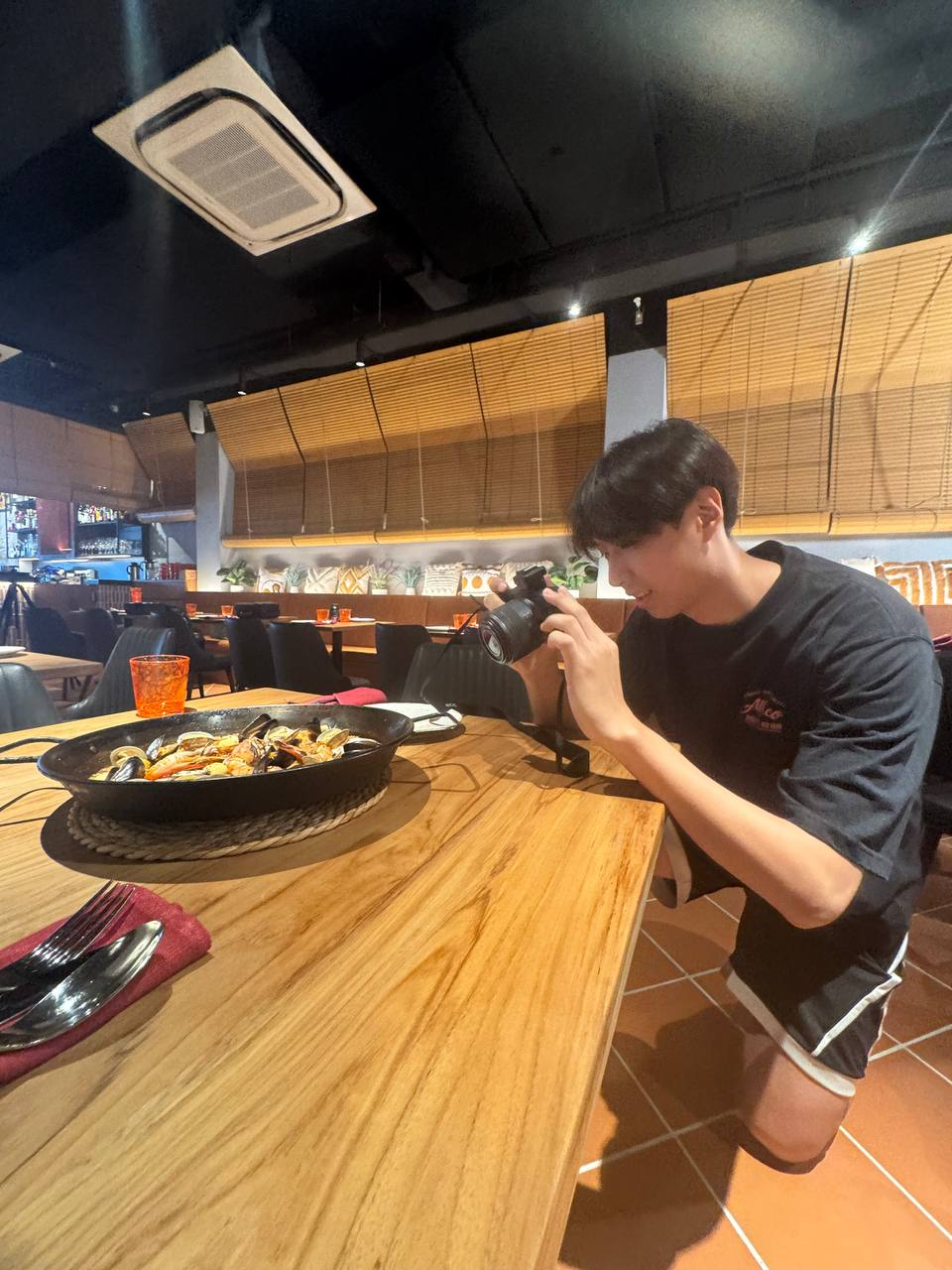
I’m a Business Studies student, and I spent seven weeks inside the marketing team of Cantera Collective — Chicco, Il Toro, Kulto, Cenzo, Casa Mori, Humo and Bario. I expected to get better at making content. I did.
The part I did not expect was how much of marketing happens before anything is made: deciding who it is for, what it should make them expect, and whether the business can actually deliver on it. This page is the honest version of what changed, including the parts my supervisor was right about.
“Gilbert demonstrated strong technical capability throughout his internship, particularly in his understanding and application of AI tools. He applied these effectively to support development projects and consistently showed curiosity and an entrepreneurial mindset, often thinking beyond his assigned responsibilities. At times, he tended to look for the quickest approach to completing tasks and could overanalyse situations, which occasionally slowed decision-making. With greater confidence in his judgement and a willingness to embrace more challenging opportunities, Gilbert has strong potential to grow into an innovative professional.”
What my supervisor saw — and where it shows up.
Technical capability
“Strong technical capability, particularly in understanding and applying AI tools.”
Weeks 6–7. The development-shaped work is where this is visible: the Events Toolkit draft website, the mock membership system with group accounts, points wallet and status, and the filmed storyboard reenactments. My evidence here is the output recorded in my weekly reflections.
Curiosity
“Consistently showed curiosity.”
Week 7, researching how other restaurant groups structure loyalty rather than adopting the first recommended model. Week 4, treating TikTok as a search surface rather than a feed. Week 1, taking a closed restaurant under renovation as an opportunity to see how positioning is built before opening.
Entrepreneurial mindset
“An entrepreneurial mindset, often thinking beyond his assigned responsibilities.”
The brief in Week 4 could have been read as 'post more videos'; I proposed a repeatable content system with its own success measures. The Week 7 task was a loyalty concept; I built the membership screens and argued for cross-brand unlocks that turn retention into acquisition for the group's other venues.
Quick-solution tendency
“At times he tended to look for the quickest approach to completing tasks.”
Week 6. On parts of one project I worked from my own reading of the brief rather than confirming it first, and some of the work was revised as a result. The speed itself was useful; what it needed was a checkpoint in front of it. Since then I confirm the brief in writing and show structure early rather than a finished first version.
Overanalysis
“Could overanalyse situations, which occasionally slowed decision-making.”
Week 7, on the loyalty proposal. I wanted to justify reward costs and tier thresholds properly, but there was limited transaction data and none was arriving. What resolved it was reframing the deliverable as a first version designed to be adjusted with real behaviour — and stating that limitation in the proposal instead of implying certainty.
Strength.
Shadow.
Response.
Every strength my supervisor identified has a cost when it runs unchecked. Naming both, and the working method I use in response, is more useful than defending either.
Curiosity
I explore possibilities other people have not asked about yet.
Too many possibilities turn a clear task into an unnecessarily complicated one.
Define the objective first, and stop exploring at the point where another option would not change the decision.
Efficiency
I look for faster ways to work and I usually find them.
Speed can quietly become the objective instead of the method.
Ask whether this task needs optimising or thinking about. Most need the first. The ones that need the second are the ones that matter.
Analysis
I consider alternatives and trade-offs rather than taking the first answer.
I can delay a decision waiting for certainty that is not available.
Set the threshold before starting: what would change my mind, and is any of it obtainable? If not, decide and schedule a review.
Technical confidence
I am comfortable experimenting with unfamiliar tools and building rough versions.
A tool can become a solution looking for a problem.
Start from the business problem and the customer, then choose the tool — and be willing to conclude that the answer is not technical.
What actually changed
in seven weeks?
Content
Capture footage that looks good on the day.
Capture footage that gives the edit options and fits the brand it represents.
Marketing
Social content is the output marketing produces.
Content is one touchpoint on a path that includes search, website, booking and follow-up.
Brand
Find the approach that works, then reuse it across the group.
Shared standards, brand-specific execution — consistency is not sameness.
Technology
Use tools to finish tasks faster.
Judge each shortcut by whether it removes work or removes thinking.
Decision-making
Keep exploring until the answer is defensible.
Decide what information would change the decision, then act and schedule the review.
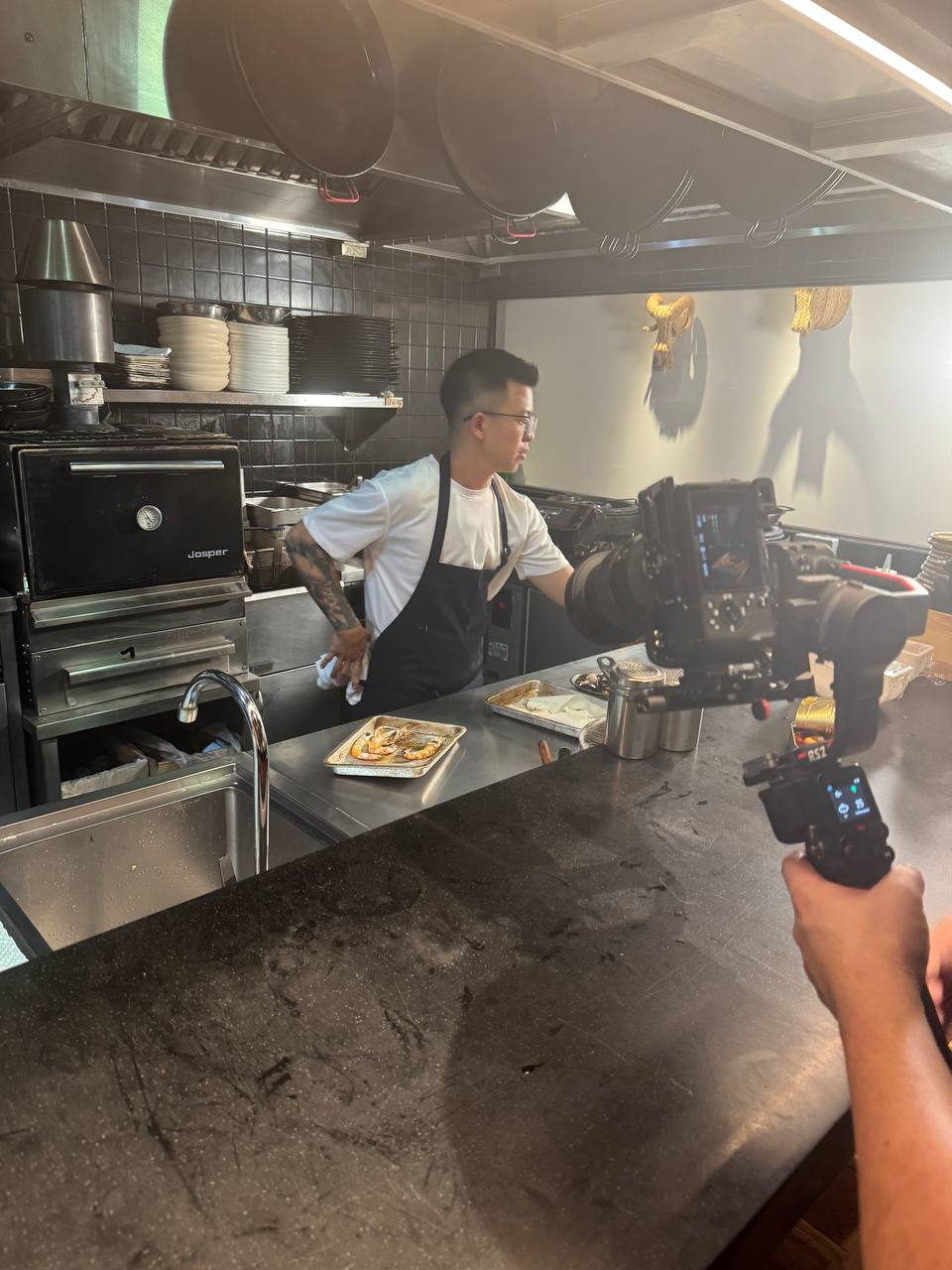
The craft is the marketing. Customers trust what they can see being made.
What hospitality
marketing taught me.
The product is an experience, not a dish.
At Il Toro the woodfire aroma reaches the customer before the food does. At Cenzo the pacing and the introduction of each course are part of what is being paid for. Restaurant marketing cannot be separated from the room, the service and the smell of the place — which is also why content that only shows plated food undersells almost every venue.
Content has a short shelf life.
A restaurant needs a continuous reason for people to pay attention: new menus, seasonal dishes, events, collaborations. That is why a repeatable format matters more than one exceptional post, and why every shoot has to produce more than one usable piece.
Marketing runs on the operation's clock.
A dish is plated once and looks its best for minutes. A dining room can only be occupied between services. A promotion still has to be workable for the kitchen executing it on a Friday night. Feasibility is not a constraint applied to marketing ideas afterwards — it is part of whether the idea is any good.
Brand consistency has to survive many hands.
Search results, website, menu, WhatsApp, the reservation, the room, the review afterwards. Each is produced by different people at different times, and the customer assembles them into one impression without knowing or caring which team made which part.
Retention is not an afterthought in hospitality.
A restaurant cannot indefinitely buy its way to new customers at the volume it needs. That is what makes loyalty a structural question about behaviour and margin rather than a promotional one about discounts.
And what this
company taught me.
Cantera Collective is not one restaurant, it is seven concepts sharing a marketing team. In a single day I could be writing casual, warm copy for Chicco and then thinking about pacing and restraint for Cenzo. There is no house voice to fall back on.
That taught me context-switching as a professional skill rather than an inconvenience: reloading who the customer is, what the occasion is and what the venue can credibly claim, before writing a single line. It also taught me why a group structure is commercially interesting — a customer loyal to one venue is a customer the group has already paid to acquire for the other five, which is exactly the argument I built the cross-brand loyalty logic on.
Working across brands is also what stopped me generalising. Almost every conclusion I reached in one venue was contradicted by another, which is a harder and more useful way to learn positioning than reading about it.
Creative
Filming and camera settings
Lighting for food and people
DJI Pocket 3 in live events
Editing and coverage planning
Storyboarding
Digital
SEO and website review
Menu and layout design
Meta Ads Manager audiences
Metricool scheduling
Prototyping a working site
Customer
BistroChat and WhatsApp marketing
Loyalty and reward design
Segmentation
Journey mapping
Events and private dining
Strategic
Brand positioning across venues
Trade-off analysis
Competitor research
Decision frameworks
Development,
written as actions.
Decision-making
Before deciding, write down what information is essential and what would actually change the answer. If none of it is obtainable, commit and set a review date instead of continuing to analyse.
Challenge
Volunteer for work outside my technical comfort zone rather than defaulting to the tasks where I already know I will perform, and state a recommendation with its reasoning instead of a balanced summary.
Analytics
Define a measurable objective before executing any future marketing project, and review the result against it afterwards — so my next portfolio can evidence outcomes, not only contributions.
Communication
Confirm my understanding of a brief in writing before starting, and show structure or a rough draft at the earliest point rather than presenting a completed first version.
The biggest change
was not a new tool.
I learnt cameras and lighting. I used new systems — BistroChat, Metricool, Meta Ads Manager, Canva. I built a draft website and a mock membership system. I became more familiar with SEO, advertising, loyalty and customer experience.
But the development that will still matter in five years is smaller than any of that: I learnt to ask better questions before choosing an answer. The tools will change. The questions will not.
- How do I capture attention?
- What are we actually trying to change?
- Would this matter to me?
- What will this make someone expect?
- Does this create value, and at what cost?
- What might I be missing?
- When do I have enough information to act?
I came in
wanting to
learn marketing.
I left
learning how
to think about it.